
Articles
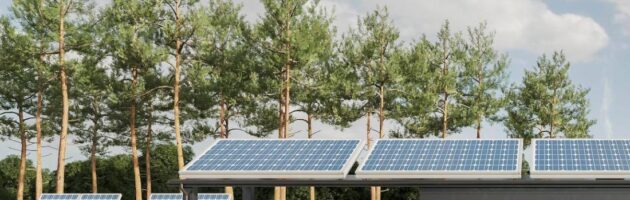
Alternative sources of power supply: betting on solar power plants
Alternative sources of electricity supply: solar power plants as a step towards autonomy
The issue of energy independence has long gone beyond talk "for the future". Today, it is a real necessity - especially for the private sector, businesses and small industries. Regular power outages, high tariffs, the desire to get away from dependence on the central grid - all this prompts people to look for an alternative. One of the most reliable solutions is the installation of solar power plants.
W2Studio offers designing (https://w2studio.com.ua/proektirovanie-i-montazh-solnechnyh-stanczij) and turnkey installation of solar power plants in Kiev and the region. This is not just a supply of equipment, but a complete solution: from consultation and calculations to commissioning of the finished system.
Why install a solar power plant
SES is an opportunity to provide your home or business with a stable source of electricity. The station's operation does not depend on the central grid, which means that it is not subject to blackouts and accidents. This is especially relevant in private sectors, dachas, remote cottages or industrial premises, where downtime due to lack of light can cost money.
The main benefits of SES are:
-
Energy independence
-
Savings on utility bills
-
Opportunity to participate in the "green tariff"
-
Reliable backup power
-
Durability and payback
-
Safety and environmental friendliness
Today, the installation of solar power plants and turnkey installation of solar panels - it's no longer exotic, it's an established market. And the sooner a person enters this system, the sooner he or she will start to get a return.
Types of solar power plants: tailored to the application
Each facility is unique, and the type of station should not be "fashionable", but real needs.
1. Autonomous SES
Completely independent of external sources. Equipped with batteries that store energy for use at night or on cloudy days. Ideal for remote sites, summer houses, farms and homes without a stable power supply.
2. Network SESs
They work in conjunction with the general power grid. Generate electricity and feed the excess back into the grid, which allows you to earn money from the "green tariff". Suitable for private homes, commercial buildings and offices.
3. Hybrid SES
Combine both approaches. During the day they consume and generate, at night they use the grid or batteries. A universal option if stability and flexibility are important.
Where you can place solar panels
Panel placement depends on site configuration and level of consumption:
-
On the roof - the classic version. It is used most often. Good for homes and offices.
-
On the balcony - solution for apartments and small spaces. Allows for backup power or partial coverage of needs.
-
On the ground - for large areas and facilities with high consumption. The panels are mounted on special racks, often with adjustable tilt angle.
How the design and installation of the SES takes place
For the station to be really effective, you need to think through every detail. Specialists W2Studio do the whole process in stages:
-
Analysis and design.
Power is calculated, components are selected, layout is determined, and design documentation is created. -
Equipment selection.
Depending on the purpose - solar panels, inverter, batteries, monitoring and protection systems are selected. -
Installation of frames.
Metal structures and fasteners are installed - reliably, accurately, taking into account wind and snow loads. -
Installation and connection.
Conducted according to regulations, in compliance with all safety requirements. -
Testing and commissioning.
Functionality under different loads is checked. After that - connection to the mains or autonomous cycle. -
Documentation.
Includes technical specifications, layout diagram, equipment passport and project note. All for legal operation, including under the "green tariff".
Examples of the use of SES
-
Private houses and cottages - up to 10 kW, allow you to provide everything you need even during peak hours.
-
Office buildings - A partial coverage or standby scheme.
-
Commercial facilities - including terminals, cafes, small shops.
-
Production facilities - especially in the green business sector.
-
Backup power supply - during power outages, especially in winter or in remote areas.
How much does it cost to install a solar plant
The cost is calculated on an individual basis. Influences are:
-
Capacity and type of SES
-
Number of panels and their capacity
-
Type of installation (roof, ground, balcony)
-
The need for hoarding
-
Difficulty of installation
Typically, a basic home system pays for itself in 5-7 years. There is no need to wait - savings and stability can be felt immediately after start-up.
Why choose W2Studio
Company W2Studio - is not just a contractor, but an engineering partner that takes care of the entire process: from site analysis to commissioning.
Benefits of working with us:
-
Installation warranty - from 1 year
-
Use of proven equipment
-
Certified specialists
-
Support at all stages
-
Assistance in processing documents
-
Experience of work in Kiev and the region
Our goal is not just to install panels, but to ensure that you have uninterrupted power at all times of the year.
Conclusion
Alternative energy sources are not about fashion, but about stability, economy and sustainable development. Solar stations are one of the most affordable and practical options, especially in the Ukrainian climate. The main thing is to entrust the installation to professionals, so as not to waste time and money on alterations.
If you are planning to install a solar power plant in Kiev or Kiev region - contact W2Studio. We will do everything on a turnkey basis - quickly, accurately and with a guarantee of the result.